

Whether a primary, secondary, or post-secondary institution, collaborating with professional first responders in a time of crisis is a requirement.
In my first blog on campus safety and crisis management, I describe 3 stages of crisis management and discuss the advantages of integrating critical sensors and devices into an ‘early warning system.’ The stages include:
1. Awareness
2. Coordination and collaboration with professionals
3. Mass notification
These 3 stages are intertwined – awareness bolsters coordination and collaboration, which supports mass notification.
Whether a primary, secondary, or post-secondary institution, collaborating with professional first responders in a time of crisis is a requirement. Normally, that interaction will occur on site, just before or after the event.
Imagine a scenario where you could:
• Share video surveillance feeds with firemen before they arrive.
• Discuss how to handle the situation with emergency medical technicians.
• Coordinate with the police on evacuation locations, so the first responders don’t conflict with fleeing students and staff.
All of this is possible with mobile applications. In fact, when a sensor or device alarms or a 911/112 call is initiated, internal and external personnel will automatically receive an alert and connect them together in a virtual conference room. This virtual conference room is a fully recorded, secure location for real-time document sharing, viewing of surveillance camera feeds, and control center screen sharing. Even more, recordings can be shared and reviewed for future safety plan updates.
Coordinating and collaborating with first responders is the second step in providing a safe learning environment.
In a time of crisis, swift action is critical. Informed decisions rely on collaborating with professionals. If you can accelerate that discussion, you can begin the final stage of crisis management – alerting your population via mass notification.
In the next blog, I will write about the final stage, mass notification.
If you’d like to learn more about our campus safety and crisis management solutions, please visit the links for podcasts, brochures, white papers, customer references, and thought leadership videos.
Greg Kovich
Global Sales Lead, Education VerticalGreg Kovich leads global sales for ALE’s Education vertical. Greg has overseen or created several Education solutions including “The Fundamentals of Communications” – a vendor neutral course on digital network communications; “Safe Campus” – a solution uniting emergency alerts with first responder collaboration and mass notification; “Secure Campus” – a solution that allows instructors to limit student network access to determined sites; and “Pandemic Education Continuity” – a solution that enables classroom instruction in the event the institution is closed due to health or environmental crisis.
He is a 1992 graduate of Indiana University with over 20 yrs experience in Information Technology.
Sobre o autorBlogs mais recentes
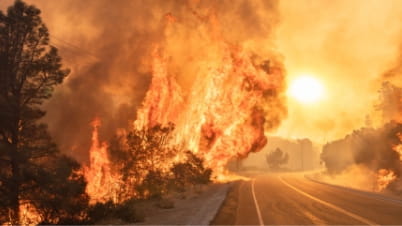
Quando a infraestrutura é testada pelo fogo — literalmente
O OmniSwitch 6865 prova sua confiabilidade durante um incêndio real à beira da estrada, mantendo a infraestrutura crítica online sem falhas.

12 principais maneiras de prevenir ciberataques em aeroport…
Com o aumento dos ciberataques, proteja as operações e a segurança dos aeroportos com uma estratégia de segurança cibernética robusta e em várias camadas.

O dia em que seu mundo vira de cabeça para baixo
O gerenciamento eficaz de crises exige uma solução segura e eficiente na qual você possa confiar.

IA: Manutenção preventiva e preditiva para as redes das rod…
A manutenção orientada por IA melhora a eficiência, a segurança e a resiliência das redes das rodovias, ao mesmo tempo em que minimiza o tempo de inatividade.


